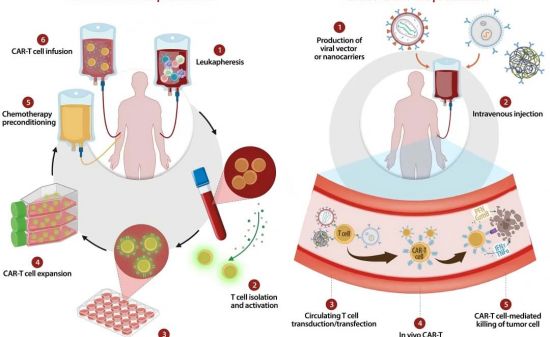
In a landmark 1992 study published in The Journal of Experimental Medicine, researchers reported a serious biosafety incident during an experiment involving retroviral vectors. Autologous bone marrow cells transduced ex vivo were infused into severely immunosuppressed rhesus monkeys. Unexpected contamination with replication-competent retrovirus (RCR) in the vector led to 3 out of 10 animals developing T-cell lymphomas, resulting in death within approximately 200 days. This event underscored the critical importance of excluding replication-competent viruses in gene therapy vectors.
Although no replication-competent lentiviruses (RCL) have been documented to date in clinical-grade preparations, the theoretical risk persists due to potential homologous or non-homologous recombination events during vector production.

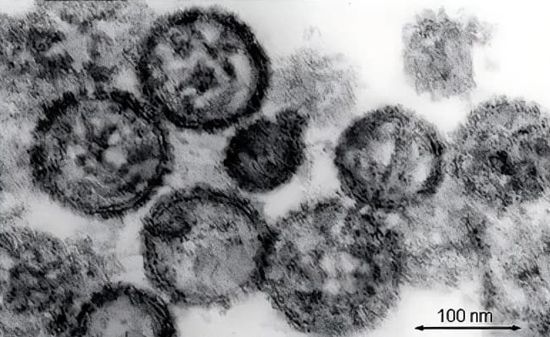
Taking the wild-type HIV, a typical representative of lentiviruses, as an example, it possesses complete infection and replication capabilities. The core lies in its ability to mediate host cell recognition and binding through glycoproteins, along with a complete replication and amplification mechanism coordinated by key components such as gag (core protein-coding gene), pol (reverse transcriptase-coding gene), and env (envelope protein-coding gene).
In contrast, modern recombinant lentiviral vectors separate these key elements across multiple plasmid constructs (typically a third- or later-generation split-genome design) to enable safe gene delivery while eliminating self-replication potential. Virus particles are assembled only upon co-transfection into producer cells.
However, during large-scale manufacturing, unintended recombination—via homologous sequences shared between plasmids or non-homologous end joining—can occur, potentially reconstituting a complete viral genome and generating replication-competent lentivirus (RCL).
The core strategy for RCL detection therefore involves co-culturing the test sample with susceptible cells to provide an optimal environment for any potential RCL to amplify/enrich. This is followed by endpoint detection methods using different principles to confirm or rule out presence, ensuring robust and reliable results.
Tested sample types typically include:
· Cell culture supernatant (e.g., end-of-production cells, EOPC)
· Viral bulk harvest or supernatant (requires culture-based amplification)
· Post-transduction target cells (suitable for rapid molecular methods to support release)
The U.S. FDA requires that each clinical dose of viral product contain less than 1 RCL per dose.
Core requirements: Support virus invasion, amplification, and particle formation, matching common envelope glycoprotein receptors. The C8166 cell line is preferred. For in vivo CAR products, Brc Biotech can conduct research on susceptible cells based on your specially designed envelope.
The positive control uses wild-type HIV-1, which has better batch stability than Rescue HIV and has clear traceability. Pre-experiments are needed to evaluate the cytotoxicity of the test article on co-cultured cells and the inhibitory effect on the replication of the positive control to avoid interference in the formal experiment.
5% untreated virus supernatant is preferred; if detection conditions are insufficient, concentrated supernatant or finished products can be used, ensuring detection sensitivity reaches 1 RCL/equivalent dose with a 95% detection probability. Each batch of transduced cells needs to be tested initially, and exemption can be applied for after accumulating enough negative data.
Per CDE (and aligned with FDA) expectations, at least two orthogonal methods based on different principles are required:
· Preferred: Quantitative Product-Enhanced Reverse Transcriptase (QPERT) assay for reverse transcriptase activity
· Complementary: VSV-G qPCR for envelope gene nucleic acid sequences Additional options include gag or pol qPCR, and p24 capsid protein ELISA, to maximize confidence and reliability.
BRC BIOTECH is fully equipped and compliant for RCL testing. We have completed comprehensive method validation with detailed summary reports. Key credentials include:
· CNAS accreditation
· HIV pathogen handling qualification
· GMP QP declaration (EU)
· ISO 9001 quality management system certification
· Biosafety Level 2 (BSL-2) laboratory certification Our partner P3 laboratory holds BSL-3 certification. We provide full traceability documentation, including wild-type HIV-1 positive control sourcing reports, HIV strain bank qualification reports, and C8166 cell bank traceability/qualification reports.